


Do You Need an Asbestos Test Before Renovating or Demolishing?
If you are about to open a wall, strip out a bathroom, lift old flooring or demolish an older Newcastle home, there is one thing worth knowing before the work starts: what are you actually about to disturb?
Suspected asbestos is far easier to investigate while building materials are still intact than after they have been drilled, broken or demolished. The right check before work starts can turn an unexpected asbestos problem into a planned stage of the project.
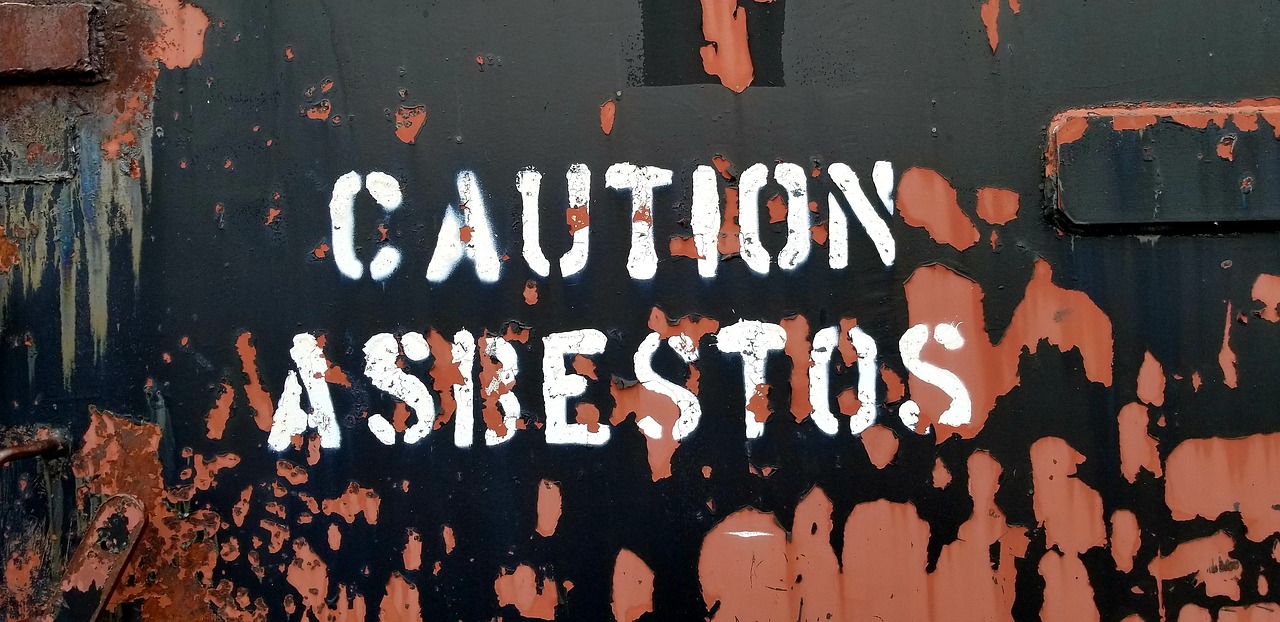
If your home was built or renovated before 1990 and your project will disturb older building materials, asbestos should be considered before work begins. You cannot confirm asbestos just by looking at a material. Suspected materials may need professional assessment and laboratory testing.
When Should a Newcastle Homeowner Consider Asbestos Testing?
Around 1 in 3 NSW homes constructed or renovated between 1945 and 1990 are estimated to contain asbestos. That does not mean every old wall or floor contains asbestos. It does mean the age and renovation history of the property should influence how you plan the job.
Older Property
Your home was built or substantially renovated before 1990, or you do not know when the materials were installed.
Renovation
Walls, ceilings, flooring, wet areas, eaves, cladding or other older building materials will be cut, drilled or removed.
Demolition
You are planning an internal strip-out, partial demolition, extension, shed removal or complete knockdown rebuild.
Unknown Material
You have found old fibro, sheeting, flooring or another material that cannot be confidently identified.
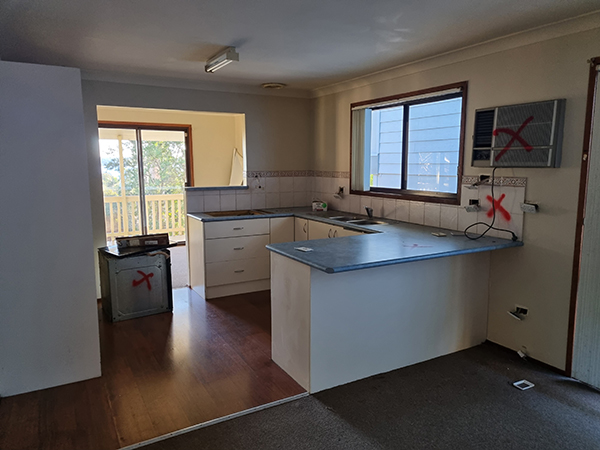
The NSW Government's asbestos guidance recommends checking older properties before renovation and explains that asbestos cannot be identified reliably by sight alone. You can read the NSW Government planning checklist for renovators .
Asbestos Inspection and Asbestos Testing Are Not the Same Thing
Homeowners often ask for an “asbestos test” when the first question should actually be: which materials need to be investigated?
Asbestos Inspection
An inspection considers the areas affected by the planned work and identifies building materials that may contain asbestos.
Its job is essentially to answer: “What here needs further investigation before we disturb it?”
Asbestos Sample Testing
Testing involves laboratory analysis of a representative sample from a suspected material.
Its job is to answer: “Does the material represented by this sample contain asbestos?”
The scope of the project should influence the scope of the asbestos check.
If you are only replacing one section of wall, your investigation may be quite different from a complete strip-out or knockdown rebuild where many separate building materials will be disturbed.
One Negative Asbestos Test Does Not Mean the Whole House Is Asbestos-Free
This is one of the most useful things for renovators to understand.
Imagine a Newcastle home that has been altered several times. The original bathroom may date from the 1960s, the kitchen from the 1980s, a rear extension from the 1990s and newer flooring may be covering an older floor underneath.
A negative result from one sample tells you about the material represented by that sample. It does not automatically tell you what is in a different wall, ceiling, flooring system, shed or extension.
Ask a better question
Instead of simply asking “Does my house have asbestos?”, ask “Which materials will this project disturb, and do we know what those materials are?”
Before work begins, consider:
Where Might Asbestos Need to Be Checked Before Renovation?
Asbestos was used in thousands of building products in Australia. For a renovation, the important materials are the ones that may be disturbed by the planned work.
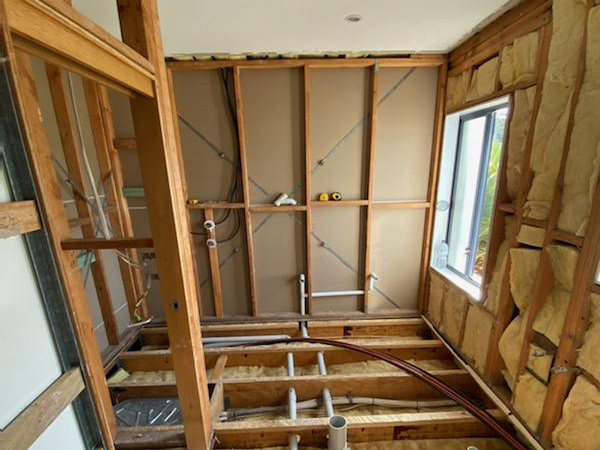
Bathrooms, laundries and kitchens deserve particular attention because the visible tiles or cabinetry may not be the only materials disturbed during a strip-out. Wall lining, flooring and concealed backing materials may also be exposed.
For more detail, see our dedicated guide to asbestos checks before renovating an older bathroom or kitchen .
Can You Identify Asbestos From a Photo?
A photo can be useful when contacting ABS because it can show where the material is located, its general condition and how it relates to the planned work.
But a photograph cannot provide a definitive asbestos result. Materials that look very similar can have different compositions.
Avoid drilling, sanding, cutting or breaking an unknown older building material just to find out what it is. Send ABS details of the project and photographs of the area so the appropriate next step can be discussed.
What Should Happen Before a Bathroom, Kitchen or Internal Strip-Out?
Finding suspicious material halfway through a renovation can stop builders, plumbers, electricians and other trades until the risk has been resolved.
A more controlled sequence is:
First define exactly what is being removed. Then investigate suspected materials within that work area. Where laboratory confirmation is needed, representative samples can be tested. If asbestos removal is required, it can then be planned before the renovation continues.
For projects that involve removing internal walls, ceilings, bathrooms, kitchens or fixtures, see ABS's internal demolition and strip-out service in Newcastle .
What About Asbestos Testing Before Demolishing a House?
A full demolition can disturb almost every part of a building, so the asbestos investigation needs to reflect the broader demolition scope.
SafeWork NSW guidance for demolition says the structure should be checked for asbestos and asbestos removed before demolition work begins.
You do not want the excavator to be the tool that discovers the asbestos.
Discovering suspected asbestos while the building is still intact creates a much more manageable situation than discovering it after structural demolition has started.
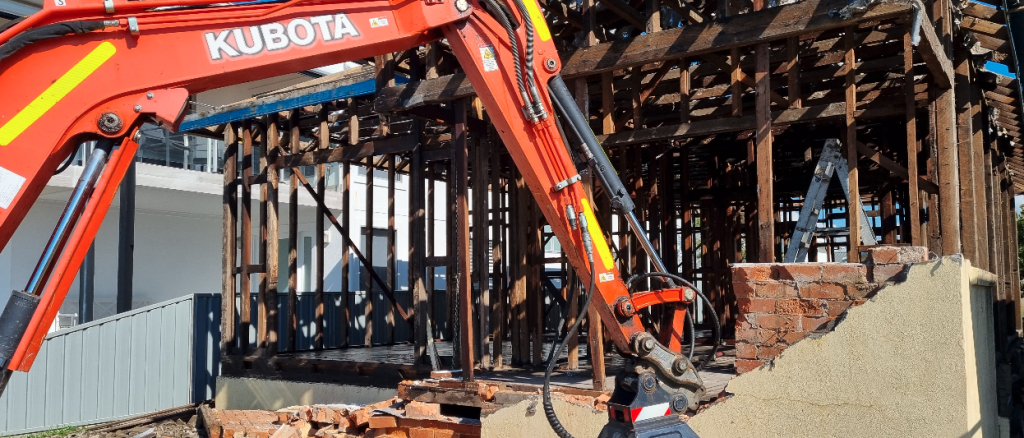
ABS can manage projects where asbestos removal needs to be coordinated with house demolition in Newcastle , helping simplify the transition from asbestos work through to demolition and site preparation.
If you are planning a knockdown rebuild, also read our guide to demolition approvals in Newcastle .
What Happens If the Asbestos Test Comes Back Positive?
A positive result does not mean the whole property has to be demolished. It means you can stop guessing and make a project decision based on what is actually present.
Check the Scope
Determine whether the confirmed material will actually be disturbed by the proposed renovation or demolition.
Plan Removal
The material type, amount, condition, location and access all influence the appropriate removal method.
Remove Safely
Where removal is required, the work can be planned using the appropriate controls, containment and disposal procedures.
Move Forward
Following the appropriate clearance process, the affected area can be handed over for renovation or demolition.
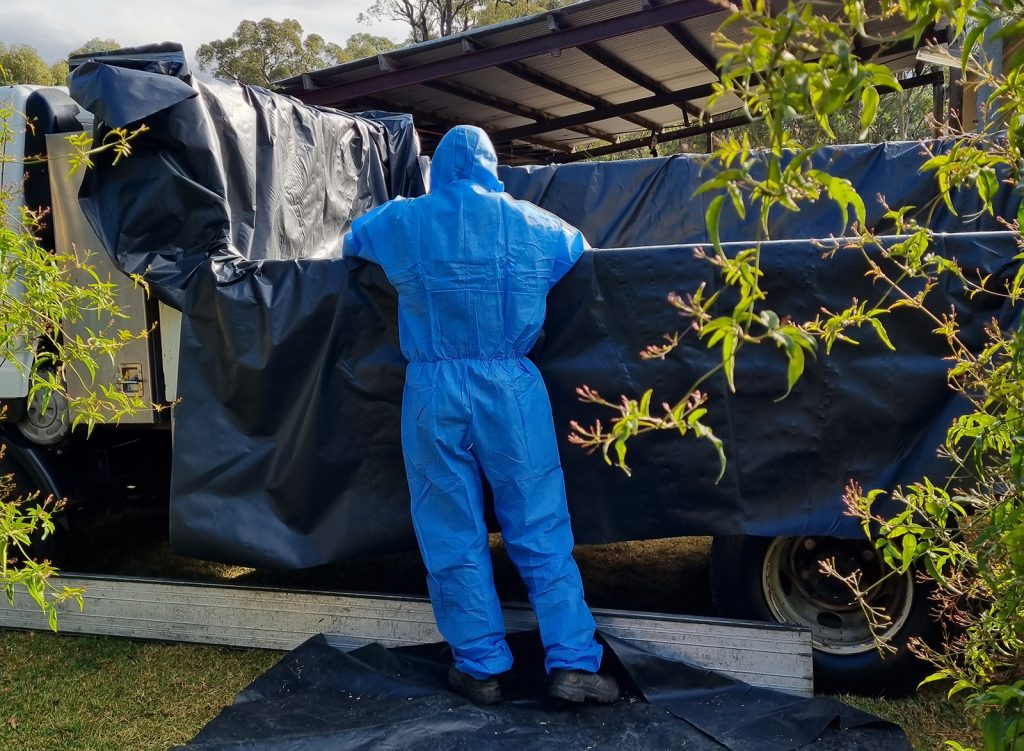
ABS provides licensed asbestos removal services for residential, commercial, renovation and demolition projects throughout Newcastle and surrounding regions.
Three Common Newcastle Scenarios
The Old Bathroom
The project: tiles, wall linings and flooring are being removed from an older bathroom.
The question: what materials sit behind the visible finishes and will they be disturbed during the strip-out?
The Knockdown Rebuild
The project: an older house is being demolished for a new build.
The question: which separate materials throughout the structure need to be identified before demolition begins?
The “Probably Fibro” Shed
The project: an old garage or shed is being removed.
The question: can the sheeting be identified before anyone starts breaking or dismantling it?
Why Speak With ABS Before Work Starts?
ABS Asbestos & Demolition is locally based in Toronto NSW and services Newcastle, Lake Macquarie, the Hunter Valley, Wyong and the Central Coast. The team has more than 15 years of hands-on asbestos removal and demolition experience.
For builder due diligence, project credentials and further compliance information, view the ABS capability statement .
Asbestos Testing Newcastle FAQs
Can you tell if something is asbestos just by looking at it?
No. The age, appearance and location of a building material can indicate that asbestos may be possible, but visual inspection alone cannot definitively confirm whether a material contains asbestos. Appropriate laboratory testing is used for confirmation.
Should I test my Newcastle home before renovating?
If the property was built or renovated before 1990 and the planned renovation will disturb materials that could contain asbestos, asbestos should be considered before work starts. The assessment should focus on the materials the project will actually disturb.
Is an asbestos inspection the same as asbestos testing?
No. An inspection identifies suspected materials and considers their location and condition. Testing analyses a representative sample to determine whether the sampled material contains asbestos.
Does one negative asbestos test clear the entire house?
No. A negative result relates to the material represented by that sample. A property may contain many different building products installed during different construction or renovation periods.
Can I send ABS a photograph of a suspected material?
Yes. Photographs can help ABS understand the location, condition and nature of your project. However, a photograph cannot definitively establish whether a building material contains asbestos.
What happens if asbestos is found before my renovation?
The next step depends on the type, amount, condition and location of the material and whether your proposed work will disturb it. If removal is required, it can be planned before the renovation or demolition continues.
Can ABS handle asbestos removal and demolition on the same project?
Yes. ABS holds asbestos removal and demolition licences and regularly works on projects where asbestos must be managed before internal, partial or full demolition.
Does ABS provide services outside Newcastle?
Yes. ABS services Newcastle, Lake Macquarie, the Hunter Valley, Wyong and the Central Coast. Contact the team with your property location and planned work so the next step can be discussed.
Know What You Are About to Disturb
Finding suspected asbestos before a renovation or demolition is a planning issue. Finding it after materials have already been broken can become a much larger problem.
If you are planning work on an older property, tell ABS the approximate age of the building, what you intend to remove and which materials concern you. Photos can also help the team understand the project.